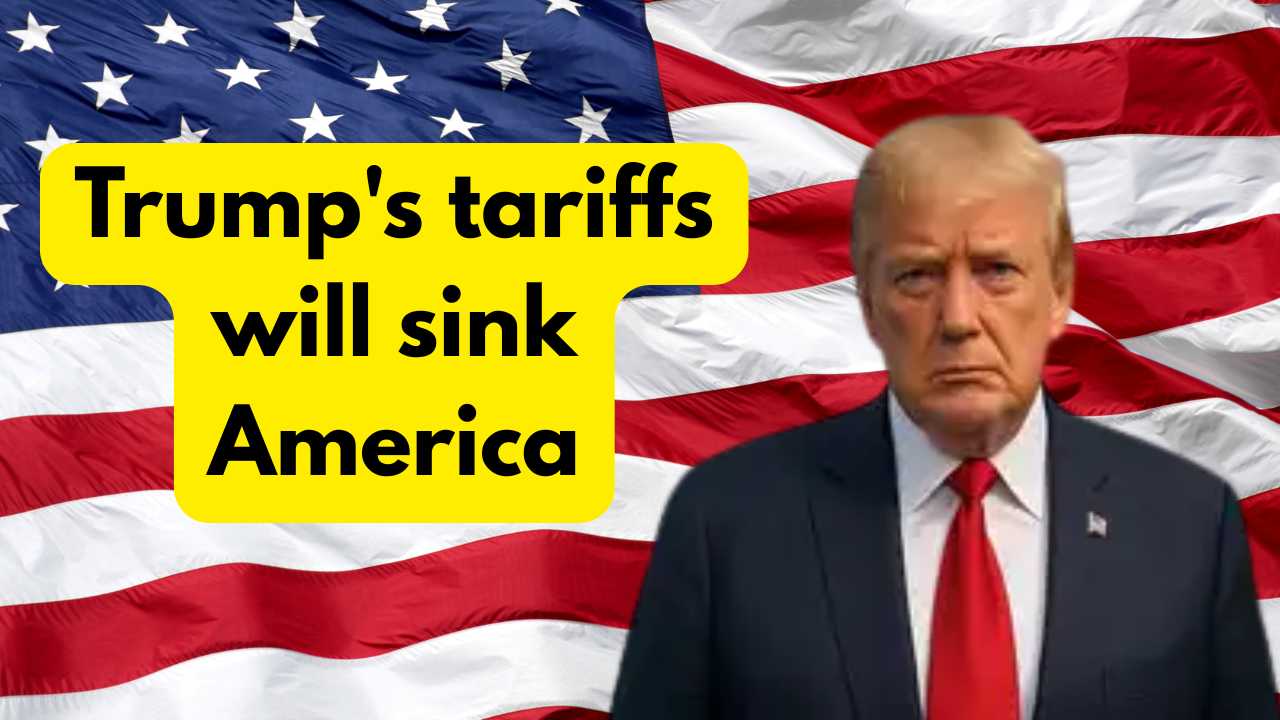
The tariffs imposed by former US President Donald Trump in April 2025 had shaken the global markets. At that time, along with the US stock market, other markets of the world also fell prey to the decline.
Even big industrialists supporting Trump started criticizing this decision. Seeing the situation worsening, Trump took a break of 90 days, but now he is again adamant on the same policy.
According to the American Yale University’s Budget Lab, the average tariff rate in the US has reached 18.3%, the highest since 1909.
The increased tariff is directly affecting American families – on average they have to spend an additional $2,400 (about ₹2 lakhs) annually.
Foreign goods that were previously available for $100 are now available for $118.30. It is estimated that the tariff could lead to a 0.5% drop in US GDP, i.e. a loss of about $140 billion (₹11.6 lakh crores).
Leading analysts believe that Trump’s move is more political than economic. According to American author Jonah Blank, India did not compromise its interests in the trade deal with the US and stuck to its decision to buy oil from Russia – Trump saw this as a personal defeat.
Also Read: UPI Down: 2147 complaints, 80% payments failed! UPI troubled us again
China’s state-run newspaper Global Times also wrote that Trump is targeting India because India is not following his terms.
In terms of oil trade, before 2022, India used to buy only 2% of crude oil from Russia, which has now increased to 35-40%. Due to cheap oil from Russia, India kept inflation under control.
The question arises that if buying oil from Russia is a problem, then why concessions with China and the European Union?
According to data from the think tank Center for Research on Energy and Clean Air, the European Union remains the largest buyer of gas, while China and India are major customers of oil.
The US is also eyeing India for defence deals. Sipri data shows that between 2019-24, India kept its arms purchases from Russia at around 35%, while increasing purchases from Israel, France, the UK and the US.
The US strategy is to draw India into its defence market so that it can benefit from the investment model of the European Union and Asian allies.
Recent statements by Prime Minister Narendra Modi indicate that India is moving towards diversification in its foreign policy.
Modi’s visit to China in the coming months, the visit of Russian President Vladimir Putin to India and the solidarity of the BRICS countries – all indicate that India is moving towards adopting a multi-dimensional diplomacy rather than relying on just one country.
Overall, Trump’s tariff decision has not only posed a challenge to the US economy but has also opened up a way to change the global geopolitical equations and India is playing its cards wisely in these changing circumstances.